

What is Graves’ Disease
Graves’ Disease is an autoimmune condition in which the immune system mistakenly attacks the thyroid gland. This can cause the thyroid to become overactive (hyperthyroidism) and may affect many other parts of the body, including the eyes, heart, muscles, bones, sleep, energy levels, and emotional wellbeing.
Although Graves’ Disease can feel overwhelming at first, many people learn to manage the condition successfully and live full, active lives.
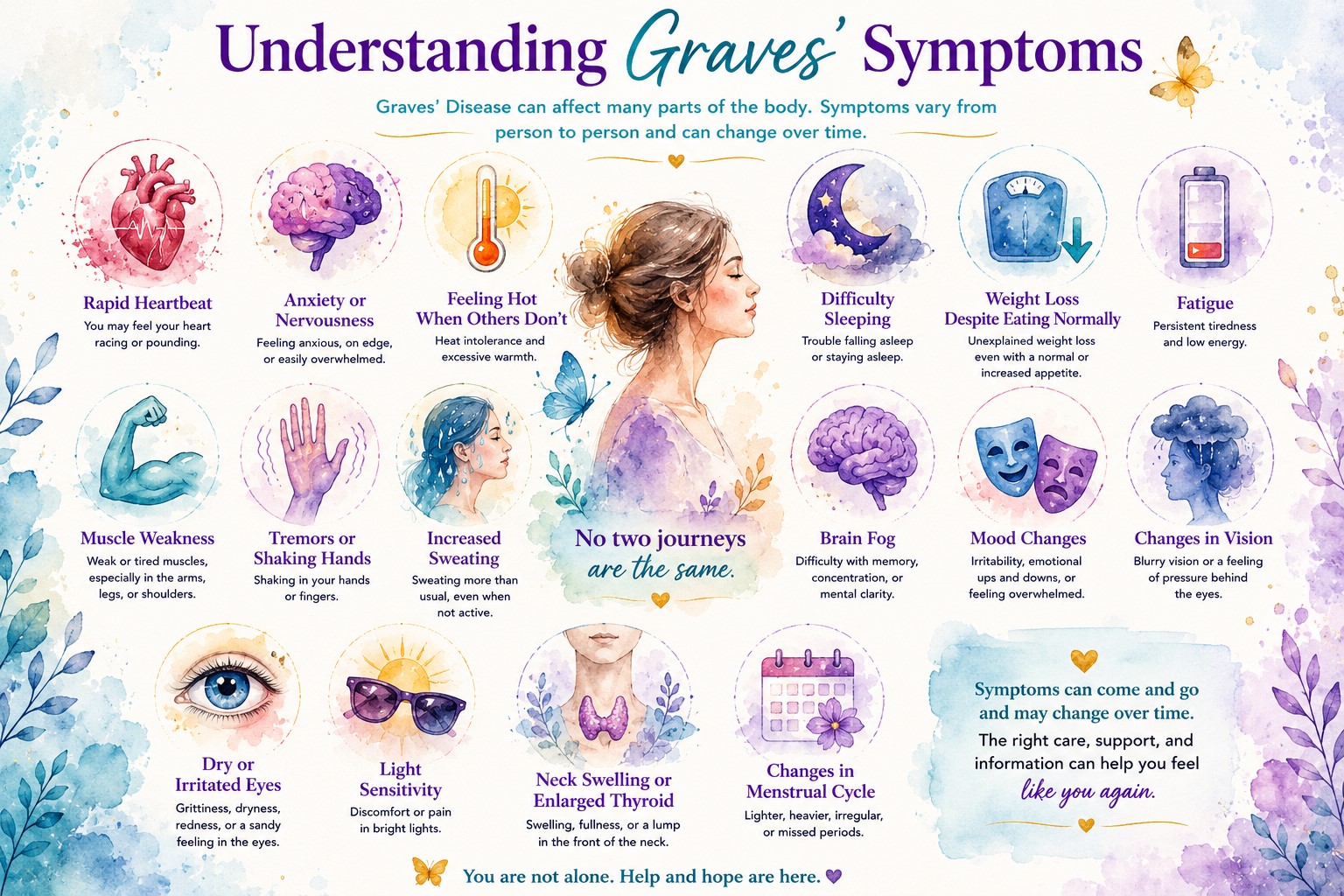
A note about Graves’ Disease Symptoms: No two people experience Graves’ Disease in exactly the same way. Some individuals develop only a few mild symptoms, while others experience a broader range of challenges. Symptoms may also change over time. During periods of increased autoimmune activity, certain symptoms may become more noticeable, while others may improve as treatment begins or the disease becomes better controlled. The symptoms listed above are among the most commonly reported, but not everyone will experience all of them. Understanding how Graves’ Disease can affect the whole person is an important first step toward finding the care, support, and resources that are right for you.
How Is Graves’ Disease Diagnosed?
Graves’ Disease is diagnosed using a combination of symptoms, physical examination, blood tests, and sometimes additional imaging studies. Because Graves’ Disease can affect people differently, no single test tells the entire story. Your healthcare provider will look at the complete picture—including how you feel, your medical history, laboratory results, and any symptoms affecting your eyes or thyroid gland.
The good news is that today’s diagnostic tools allow healthcare providers to identify Graves’ Disease and begin developing a treatment plan tailored to your individual needs.
Blood Tests
These tests help evaluate thyroid function and identify the autoimmune activity associated with Graves’ Disease.
TSH (Thyroid Stimulating Hormone)
Often lower than normal in Graves’ Disease.
Helps determine how the thyroid is functioning.
Free T4 (Thyroxine)
Measures the amount of active thyroid hormone in the bloodstream.
Frequently elevated when the thyroid is overactive.
Free T3 (Triiodothyronine)
Another important thyroid hormone.
May become elevated early in the disease process.
TSI / TRAb Antibodies
Measures antibodies associated with Graves’ Disease.
Helps confirm the autoimmune nature of the condition.
Additional Evaluation
Depending on your symptoms and medical history, your healthcare provider may recommend additional testing.
Physical Examination
Evaluation of the thyroid gland, heart rate, reflexes, and other signs of hyperthyroidism.
Thyroid Ultrasound
Uses sound waves to create images of the thyroid gland.
May help evaluate enlargement, nodules, or other thyroid changes.
Imaging Studies
In some cases, specialized imaging may be used to better understand thyroid function or anatomy.
Eye Evaluation
Recommended when symptoms such as eye dryness, irritation, light sensitivity, double vision, or eye bulging are present.
May help identify Thyroid Eye Disease (TED) early in the course of the disease.
Looking Beyond the Numbers
Laboratory tests are important, but they are only one part of the picture. Graves’ Disease affects each person differently, and your symptoms, quality of life, and overall wellbeing are just as important as the numbers on a lab report. Working closely with your healthcare team can help you better understand your results and make informed decisions about your care.



Addressing Myths & Misinformation
Separating Fact from Fiction
Living with Graves’ Disease often means encountering information from many different sources, including social media, online forums, family members, friends, and healthcare professionals. While some information can be helpful, other messages may be incomplete, outdated, or misleading. Understanding the facts can help you make informed decisions and confidently navigate your healthcare journey.