

What is Graves’ Disease

Graves’ Disease is an autoimmune condition in which the immune system mistakenly attacks the thyroid gland. This can cause the thyroid to become overactive (hyperthyroidism) and may affect many other parts of the body, including the eyes, heart, muscles, bones, sleep, energy levels, and emotional wellbeing.

Although Graves’ Disease can feel overwhelming at first, many people learn to manage the condition successfully and live full, active lives.
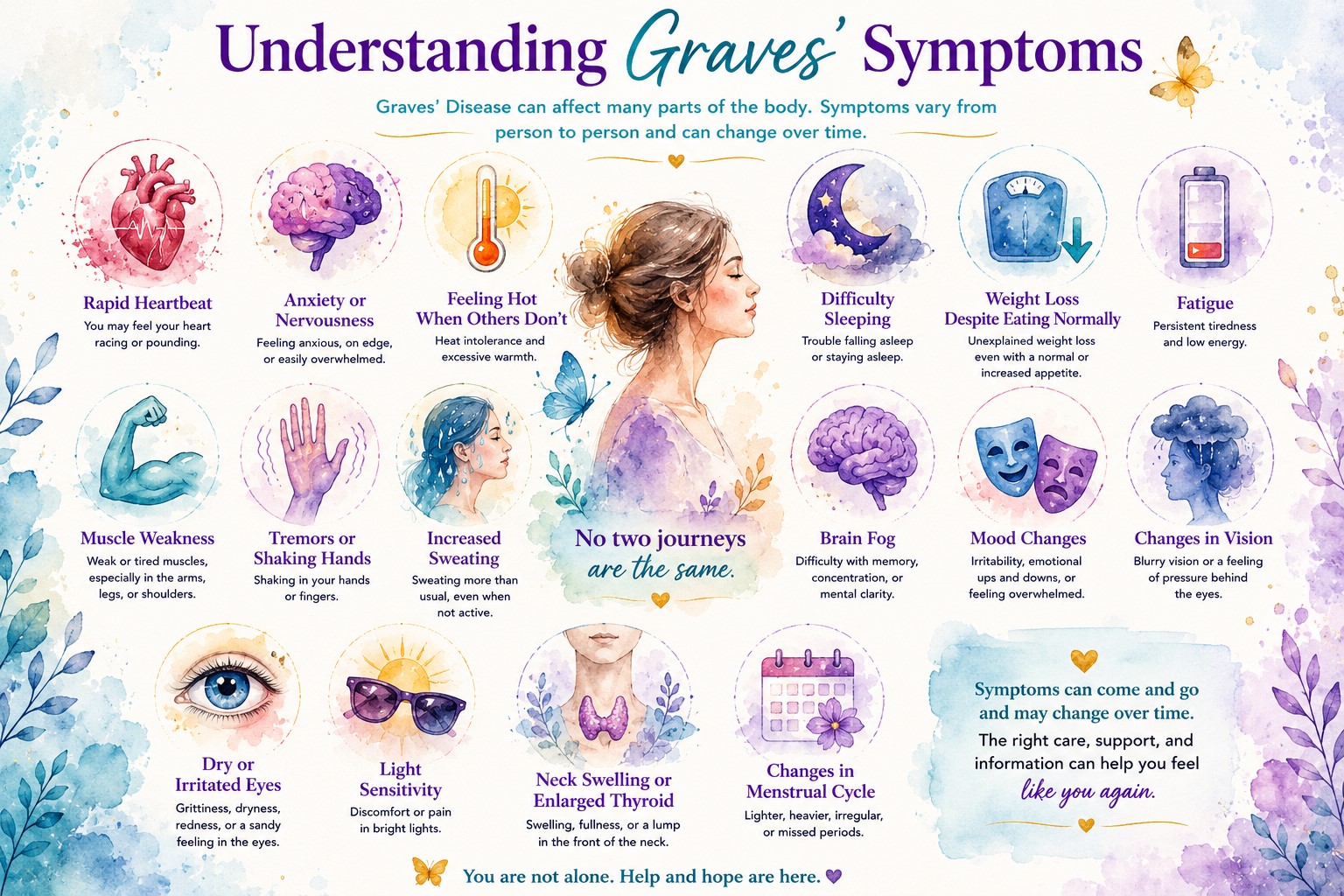
graves' disease symptoms

A note about Graves’ Disease Symptoms: No two people experience Graves’ Disease in exactly the same way. Some individuals develop only a few mild symptoms, while others experience a broader range of challenges. Symptoms may also change over time. During periods of increased autoimmune activity, certain symptoms may become more noticeable, while others may improve as treatment begins or the disease becomes better controlled. The symptoms listed below are among the most commonly reported, but not everyone will experience all of them. Understanding how Graves’ Disease can affect the whole person is an important first step toward finding the care, support, and resources that are right for you.

How Is Graves’ Disease Diagnosed?

Graves’ Disease is diagnosed using a combination of symptoms, physical examination, blood tests, and sometimes additional imaging studies. Because Graves’ Disease can affect people differently, no single test tells the entire story. Your healthcare provider will look at the complete picture—including how you feel, your medical history, laboratory results, and any symptoms affecting your eyes or thyroid gland.

The good news is that today’s diagnostic tools allow healthcare providers to identify Graves’ Disease and begin developing a treatment plan tailored to your individual needs.

Blood Tests

These tests help evaluate thyroid function and identify the autoimmune activity associated with Graves’ Disease.

TSH (Thyroid Stimulating Hormone)
Often lower than normal in Graves’ Disease.
Helps determine how the thyroid is functioning.

Free T4 (Thyroxine)
Measures the amount of active thyroid hormone in the bloodstream.
Frequently elevated when the thyroid is overactive.

Free T3 (Triiodothyronine)
Another important thyroid hormone.
May become elevated early in the disease process.

TSI / TRAb Antibodies
Measures antibodies associated with Graves’ Disease.
Helps confirm the autoimmune nature of the condition.

Additional Evaluation

Depending on your symptoms and medical history, your healthcare provider may recommend additional testing.

Physical Examination
Evaluation of the thyroid gland, heart rate, reflexes, and other signs of hyperthyroidism.

Thyroid Ultrasound
Uses sound waves to create images of the thyroid gland.
May help evaluate enlargement, nodules, or other thyroid changes.

Imaging Studies
In some cases, specialized imaging may be used to better understand thyroid function or anatomy.

Eye Evaluation
Recommended when symptoms such as eye dryness, irritation, light sensitivity, double vision, or eye bulging are present.
May help identify Thyroid Eye Disease (TED) early in the course of the disease.

Looking Beyond the Numbers

Laboratory tests are important, but they are only one part of the picture. Graves’ Disease affects each person differently, and your symptoms, quality of life, and overall wellbeing are just as important as the numbers on a lab report. Working closely with your healthcare team can help you better understand your results and make informed decisions about your care.
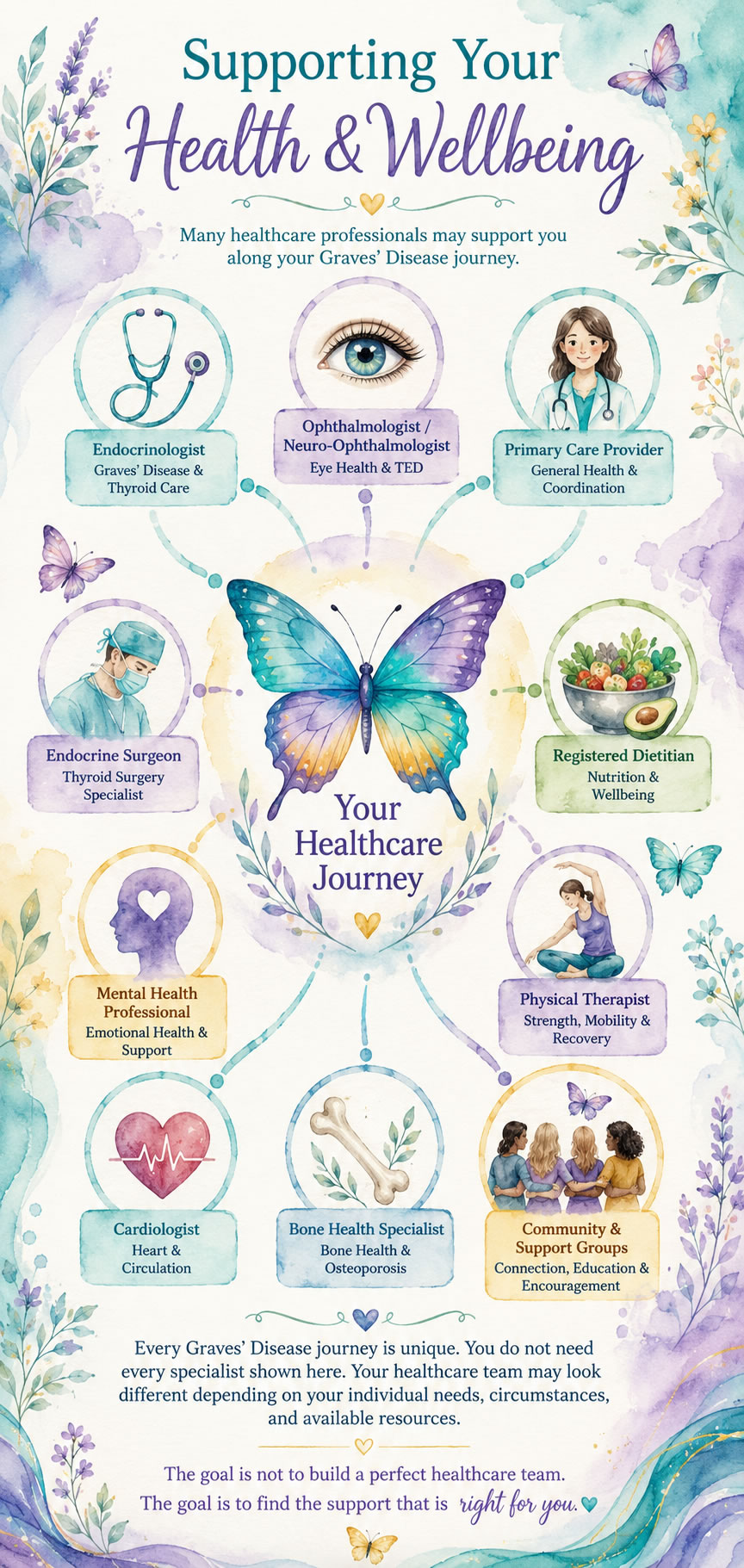
graves disease care team supporting health and wellbing on the Graves' and TED Journey
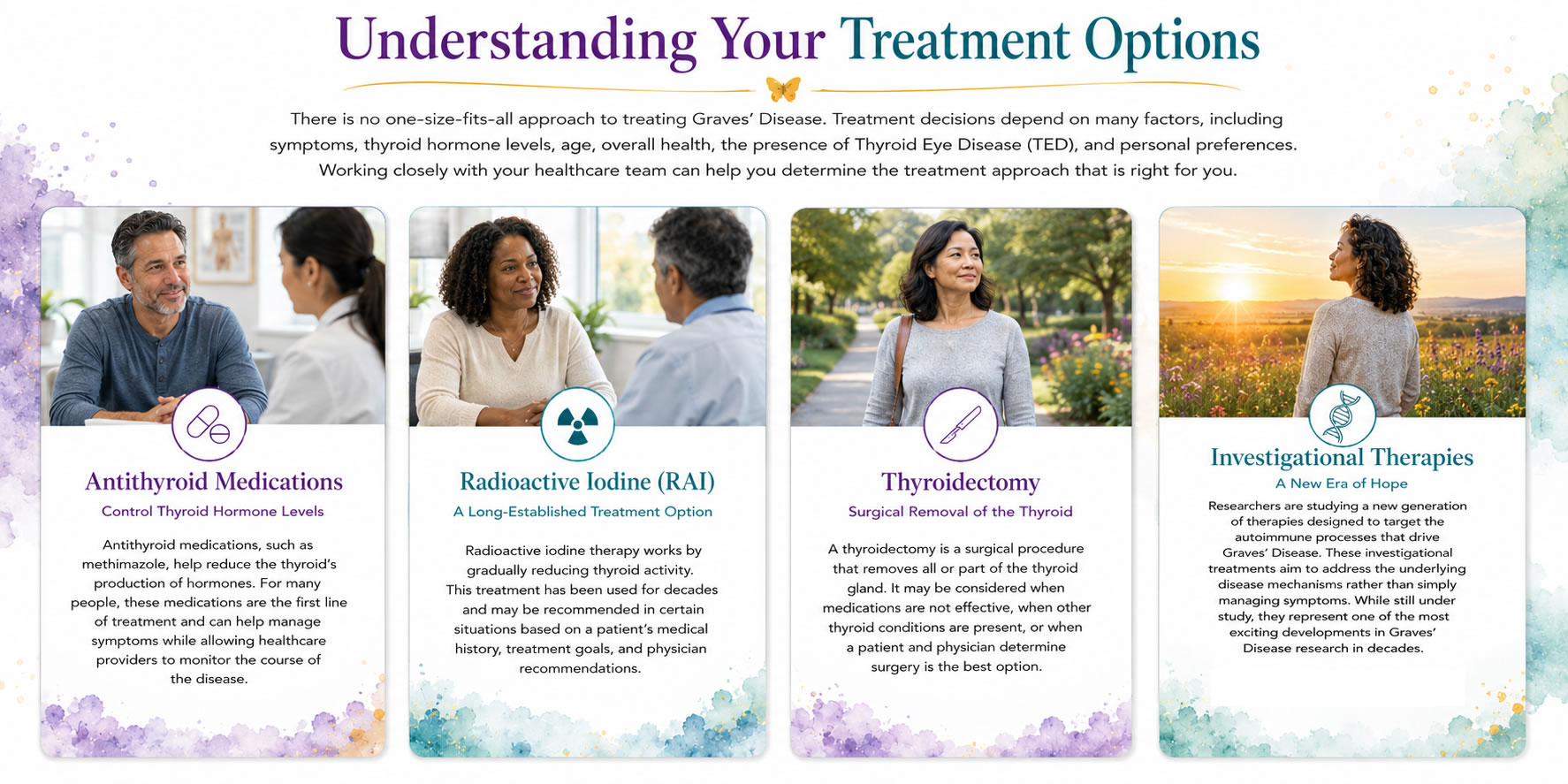
understanding treatment options for graves disease

Understanding Your Treatment Options

There is no one-size-fits-all approach to treating Graves’ Disease. Treatment decisions depend on many factors, including symptoms, thyroid hormone levels, age, overall health, the presence of Thyroid Eye Disease (TED), and personal preferences. Working closely with your healthcare team can help you determine the treatment approach that is right for you.

Antithyroid Medications

Control Thyroid Hormone Levels

Antithyroid medications, such as methimazole, help reduce the thyroid’s production of hormones. For many people, these medications are the first line of treatment and can help manage symptoms while allowing healthcare providers to monitor the course of the disease.


Radioactive Iodine (RAI)

A Long-Established Treatment Option

Radioactive iodine therapy works by gradually reducing thyroid activity. This treatment has been used for decades and may be recommended in certain situations based on a patient’s medical history, treatment goals, and physician recommendations.


Thyroidectomy

Surgical Removal of the Thyroid

A thyroidectomy is a surgical procedure that removes all or part of the thyroid gland. It may be considered when medications are not effective, when other thyroid conditions are present, or when a patient and physician determine surgery is the best option.


Investigational Therapies

A New Era of Hope

Researchers are studying a new generation of therapies designed to target the autoimmune processes that drive Graves’ Disease. These investigational treatments aim to address the underlying disease mechanisms rather than simply managing symptoms. While still under study, they represent one of the most exciting developments in Graves’ Disease research in decades.

For the first time in history, researchers are developing therapies designed to target the autoimmune mechanisms that drive Graves’ Disease itself. While these treatments remain under investigation, they offer hope for a future in which patients may have more options than ever before.

graves and thyroid eye disease journey artwork by samantha
This mixed-media artwork is a powerful self-portrait, symbolizing resilience and transformation in the face of multiple autoimmune diseases. Textured layers, vibrant colors, and uplifting words depict a journey of unmasking, healing, and self-empowerment. The warm tones of the figure contrast with the bold purples and golds, representing strength, light, and the emergence from the shadows into self-acceptance and truth.

~ Samantha, Graves & TED Patient

Addressing Myths & Misinformation

Separating Fact from Fiction
Living with Graves’ Disease often means encountering information from many different sources, including social media, online forums, family members, friends, and healthcare professionals. While some information can be helpful, other messages may be incomplete, outdated, or misleading. Understanding the facts can help you make informed decisions and confidently navigate your healthcare journey.

Fact:

Graves’ Disease is one of the most common causes of hyperthyroidism and affects millions of people worldwide. While many people have never heard of Graves’ Disease before their diagnosis, they are far from alone. Support groups, patient organizations, and healthcare professionals can help patients connect with information and community.

Fact:

Graves’ Disease and Thyroid Eye Disease are separate autoimmune conditions that often occur together. Understanding both conditions can help patients make informed decisions about treatment and long-term care.

Fact:

While Graves’ Disease is a serious autoimmune condition that requires medical attention, most people can successfully manage the disease with appropriate treatment and ongoing care. Many individuals with Graves’ Disease live full, active, and productive lives.

Fact:

Graves’ Disease can affect people from all walks of life, including athletes, healthcare professionals, parents, business leaders, students, and individuals who have always considered themselves healthy and active.

Because Graves’ Disease is an autoimmune condition, it is not caused by a lack of exercise, poor character, insufficient willpower, or a failure to take care of oneself. Many people are surprised to receive a diagnosis because they have spent years prioritizing their health and wellbeing.

While healthy lifestyle choices can support overall health, they cannot always prevent autoimmune diseases from occurring.

Fact:

The exact cause of Graves’ Disease is not fully understood. Genetics, immune system factors, and environmental influences all appear to play a role. While stress may affect overall health and wellbeing, it is not considered the sole cause of Graves’ Disease.

Fact:

A thyroidectomy (surgical removal of the thyroid) can successfully treat the effects of an overactive thyroid, but it does not eliminate the underlying autoimmune condition that causes Graves’ Disease. The immune system may continue to produce Graves’-related antibodies even after the thyroid has been removed.

Because Graves’ Disease is an autoimmune disease—not simply a thyroid disorder—some people may continue to experience autoimmune-related effects, including Thyroid Eye Disease (TED) or other health challenges that require ongoing monitoring and care.

Understanding this distinction can help patients make informed treatment decisions and better appreciate the connection between Graves’ Disease, Thyroid Eye Disease, and overall health.

Fact:

Many people continue to experience symptoms or challenges even after thyroid hormone levels are stabilized. Recovery often involves more than laboratory values alone and may include attention to sleep, emotional wellbeing, nutrition, physical health, and other factors.

Fact:

For some patients, radioactive iodine (RAI) may increase the risk of developing TED or worsen existing TED. Patients should discuss their individual risks and treatment options with their healthcare team.

Fact:

Online communities can provide valuable support, shared experiences, practical tips, and a sense of connection. Many people living with Graves’ Disease find comfort in knowing they are not alone.

However, information shared in social media groups may not always be accurate, complete, or appropriate for your specific medical situation. What works for one person may not be the right choice for another.

Online communities can be excellent sources of support and lived experience, but medical decisions should always be made in partnership with qualified healthcare professionals who understand your individual health needs.