Your Path Forward
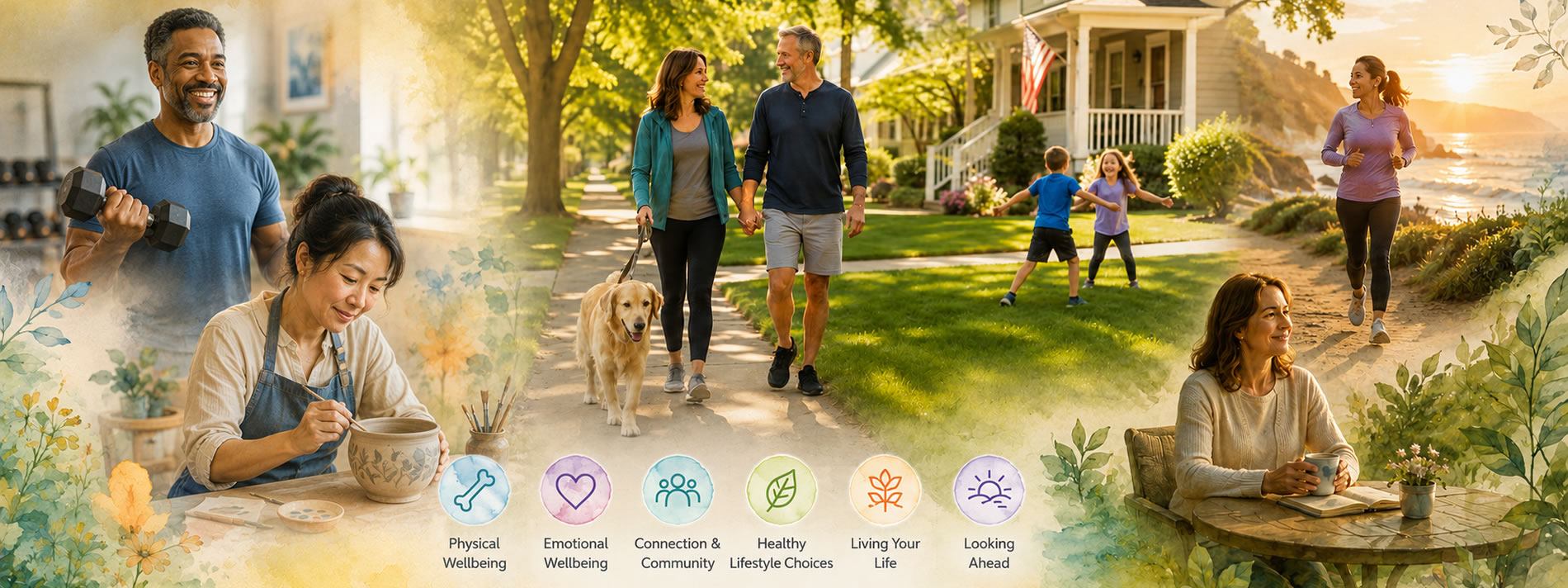
Graves’ Disease may begin with the thyroid, but it can touch many parts of your life. Whole-person care means looking beyond lab results and medical appointments to support your physical health, emotional wellbeing, daily routines, relationships, and future goals.
There is no single path to living well with Graves’ Disease. Every journey is unique. By combining trusted medical care with healthy lifestyle choices, meaningful connection, and ongoing support, you can build resilience, protect your health, and continue living a full and meaningful life.
Whole-person care isn’t about doing everything perfectly. It’s about finding the support, habits, and resources that are right for you.
Physical Wellbeing
Your physical health is about more than managing thyroid hormone levels. Graves’ Disease can affect your bones, muscles, energy, sleep, and overall strength. Taking care of your body through healthy habits, regular medical care, and early prevention can help you stay active, independent, and confident throughout every stage of your journey.

Nutrition
There is no single “Graves’ Diet,” but good nutrition is an important part of whole-person care. Eating a balanced diet rich in whole foods, fruits, vegetables, lean proteins, and healthy fats helps support your overall health. A Mediterranean-style eating pattern is widely recognized for its potential anti-inflammatory benefits and for supporting heart, bone, and long-term health. While nutrition is not a treatment for Graves’ Disease, healthy eating can help you feel your best and complement the care you receive from your healthcare team.
Exercise & Movement
Regular movement benefits nearly every part of your body. Walking, swimming, strength training, stretching, yoga, and balance exercises can improve endurance, protect bone and muscle health, reduce fall risk, and support emotional wellbeing. Start where you are and build gradually. As we grow older, maintaining muscle strength, balance, and mobility becomes increasingly important. Staying physically active, preventing falls, and building strength can help preserve independence and improve quality of life—whether you’re newly diagnosed or have been living with Graves’ Disease for many years.
Stress Management
Managing stress is an important part of whole-person care. While stress does not cause Graves’ Disease, many people report that periods of increased stress are associated with worsening symptoms or disease flares. Chronic stress may also affect sleep, energy, emotional wellbeing, and the body’s ability to recover. Simple practices such as deep breathing, gentle movement, spending time in nature, creative activities, prayer or meditation, and meaningful connection with others can help restore a sense of calm, build resilience, and support your overall health.
Bone Health
Protecting your bones is an important part of living well with Graves’ Disease. Untreated hyperthyroidism can increase bone loss over time, but there is much you can do to support strong, healthy bones. Early treatment, weight-bearing exercise, adequate calcium and vitamin D, and regular bone health screenings can all make a meaningful difference. By working closely with your healthcare team and adopting healthy lifestyle habits, you can help protect your strength, mobility, and quality of life throughout your journey.
Sleep & Energy
Many people living with Graves’ Disease experience fatigue or disrupted sleep, even after treatment begins. Changes in thyroid hormone levels, stress, anxiety, and other symptoms can all affect the quality of your sleep. Restful sleep is an important part of whole-person care, supporting healthy immune function, emotional wellbeing, and your body’s ability to recover. While improving sleep is not a treatment for Graves’ Disease, healthy sleep habits, stress management, and ongoing conversations with your healthcare team can help restore energy, promote resilience, and help you feel more like yourself again.
Emotional Wellbeing
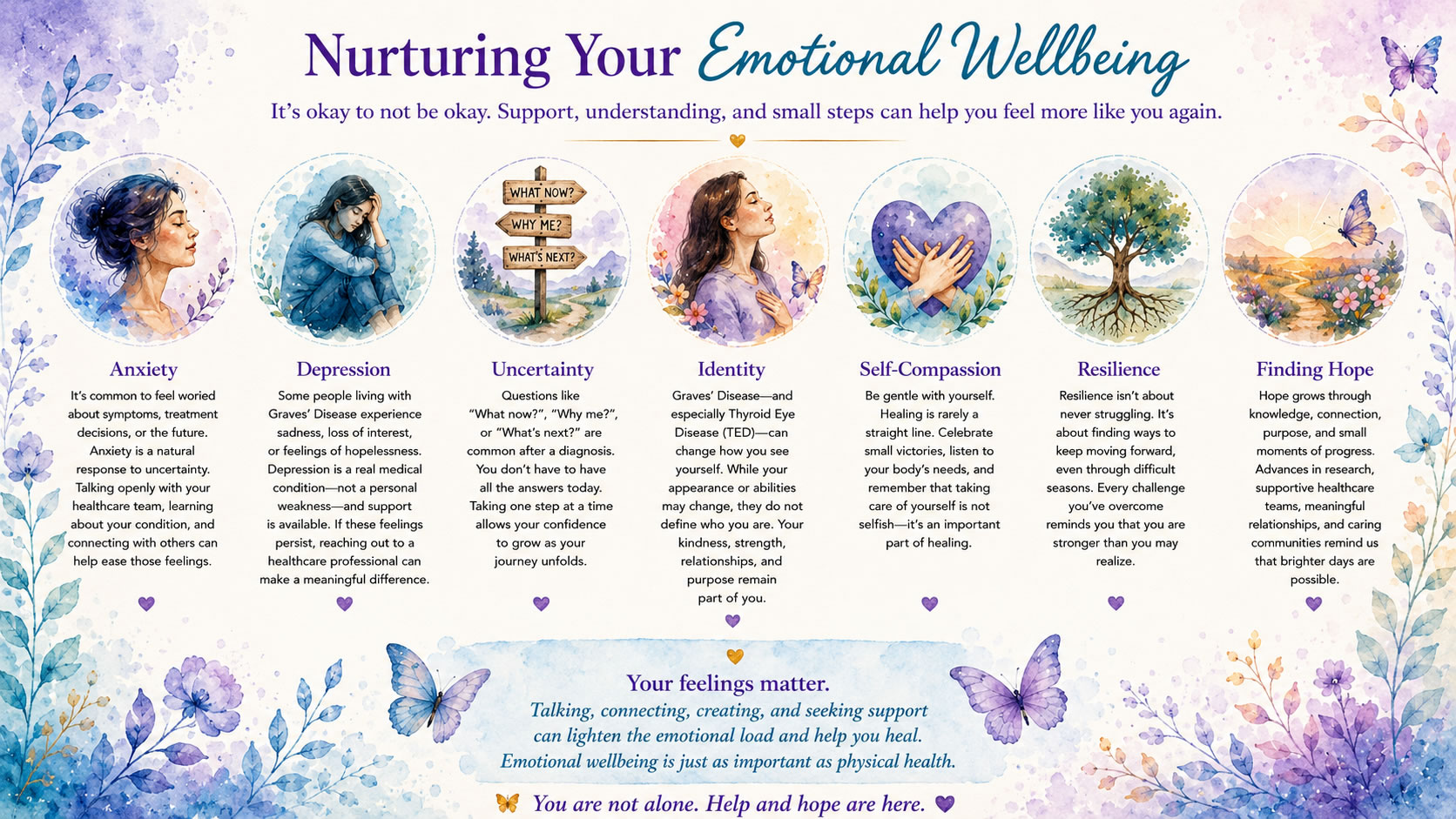
Living with Graves’ Disease can bring emotional ups and downs. It’s normal to feel anxious, overwhelmed, uncertain, or even discouraged at times. These feelings do not mean you’re weak—they mean you’re human. Your emotional wellbeing is an important part of whole-person care.
With understanding, support, and self-compassion, many people find their way to greater resilience, renewed confidence, and hope for the future. You don’t have to navigate this journey alone.
Connection & Community
You Don’t Have to Walk This Journey Alone
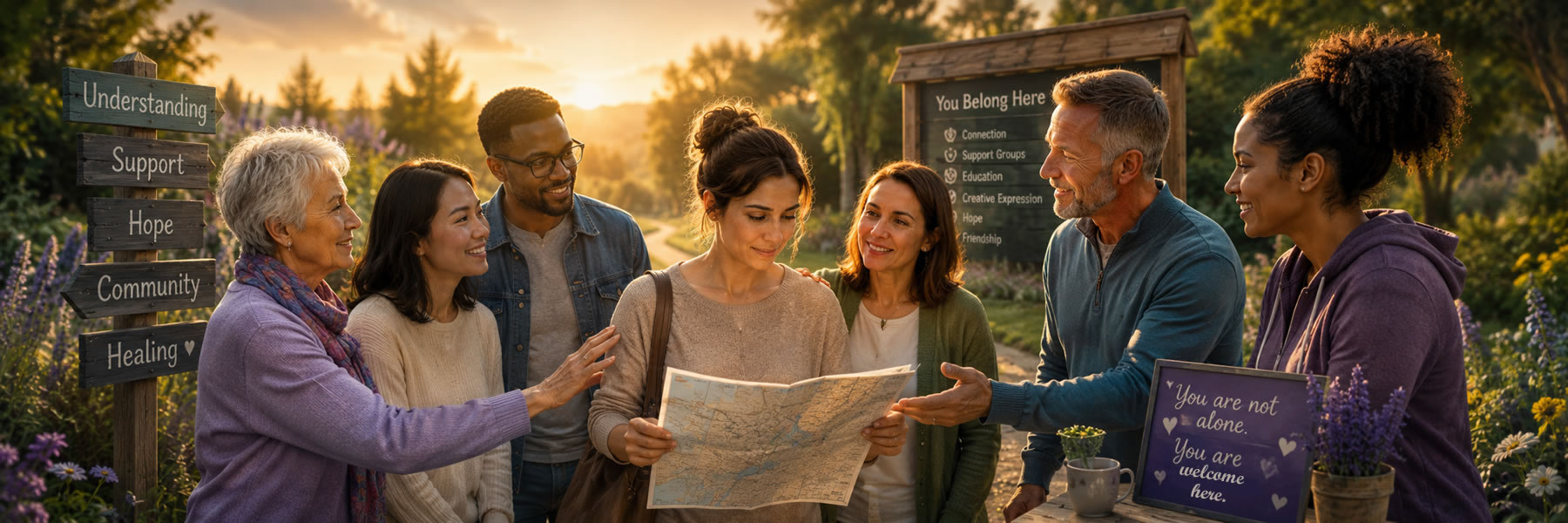
Living with Graves’ Disease can sometimes feel isolating, but you don’t have to face it alone. Connecting with others who understand, sharing your story, learning from experts, and finding a supportive community can bring encouragement, confidence, and hope. Healing is about more than managing symptoms—it also means knowing that someone is walking beside you.
The TED Community Organization is a global 501(c)(3) nonprofit created by patients, for patients. While our primary focus is Thyroid Eye Disease (TED), more than 90% of our community also lives with Graves’ Disease. We proudly welcome anyone affected by Graves’ Disease—whether or not they have developed TED.
Founded and led by people with lived experience, TED Community combines trusted education with meaningful human connection. Through innovative programs, expert collaborations, and opportunities to learn, create, and connect, we help people feel informed, supported, and empowered throughout their journey.
Every TED Community program is offered free of charge through the generosity of our partners and supporters, ensuring that no one has to face Graves’ Disease or TED alone.
Looking for answers?
CONNECTED Virtual Mini-Summits
Hear directly from leading physicians, researchers, and people living with Graves’ Disease and Thyroid Eye Disease. Our virtual educational events bring trusted information together with real-life experiences, giving you the opportunity to learn, ask questions, and discover new reasons for hope.
What you’ll gain
✓ Trusted education
✓ Expert perspectives
✓ Practical guidance
✓ Hope for the future
Visit TED Community to learn more.
*
Looking for people who understand?
Support Groups
Sometimes the greatest comfort comes from talking with someone who truly understands. Our support groups provide a welcoming place to share experiences, ask questions, and encourage one another in a safe and compassionate environment.
What you’ll gain
✓ Understanding
✓ Friendship
✓ Encouragement
✓ Connection
Visit TED Community to learn more.
*
Ready to tell your story?
Storytelling Workshop
Every person’s journey matters. Our storytelling workshop helps participants discover the power of sharing their experiences with confidence, authenticity, and purpose. Many people find that telling their story becomes part of their own healing while helping others feel less alone.
What you’ll gain
✓ Confidence
✓ Healing
✓ Purpose
✓ A stronger voice
Looking for a creative outlet?
TED ART & Creative Studio
Art has a unique way of expressing emotions that words sometimes cannot. Whether painting, writing, creating, or simply exploring creativity, our studio offers a peaceful place to reflect, heal, and connect with others through artistic expression.
What you’ll gain
✓ Creative expression
✓ Emotional healing
✓ Relaxation
✓ Joy
Visit TED Community to learn more.
*
Need someone to talk with?
One-to-One Connections
Sometimes one caring conversation can make all the difference. Our one-to-one connections help introduce you to another member of the community who understands the journey and is willing to listen, encourage, and walk beside you.
What you’ll gain
✓ Personal support
✓ Encouragement
✓ Shared experience
✓ Hope
Visit TED Community to learn more.
*
Want to stay informed?
Community Newsletter
Receive trusted educational updates, research news, upcoming events, inspiring stories, and opportunities to connect with the Graves’ and TED community—all delivered directly to your inbox.
What you’ll gain
✓ Latest news
✓ Research updates
✓ Educational resources
✓ Upcoming events

Healthy Lifestyle Choices
Living well with Graves’ Disease isn’t about striving for perfection—it’s about making small, sustainable choices that support your health over time. While medication and regular medical care remain the foundation of treatment, everyday habits can also influence how you feel, recover, and navigate life with confidence.
Healthy lifestyle choices don’t have to happen all at once. Every positive step, no matter how small, can contribute to your physical health, emotional wellbeing, and long-term resilience.

Living Your Life
Living with Graves’ Disease may change your journey, but it does not have to define your future. As your symptoms improve and you gain confidence, many people discover they can return to the activities, relationships, and dreams that bring meaning to their lives. The path may look different than before—but it can still be full, active, and deeply rewarding.
There is no right timeline for moving forward. Start where you are. Celebrate each step. Whether it’s taking a walk, planning a trip, spending time with family and friends, returning to work, discovering a new hobby, or simply enjoying a quiet afternoon outdoors, every moment of living well is part of your healing.
Life doesn’t stop with Graves’ Disease. It continues to grow.