
Knowledge empowers better conversations, better decisions, and greater hope.
The science of Graves’ Disease and Thyroid Eye Disease is advancing more rapidly than ever before. Researchers around the world are expanding our understanding of these autoimmune conditions while developing new treatments that offer renewed hope for patients and families. Here you’ll find clinical trials, research publications, educational articles, and trusted resources to help you stay informed as new discoveries continue to shape the future of care.
Clinical Trials
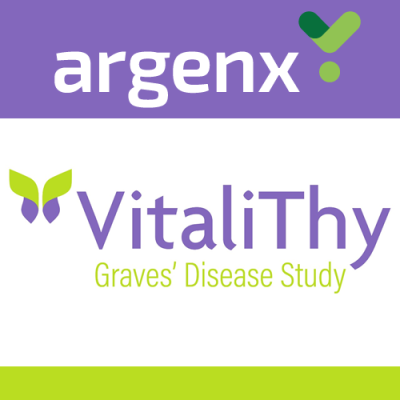
The future of Graves’ Disease and Thyroid Eye Disease treatment is being written today through clinical research. Around the world, physicians, scientists, and patients are working together to better understand these autoimmune conditions and to develop therapies that target the underlying disease—not just its symptoms. Recent scientific advances have already transformed the treatment landscape for Thyroid Eye Disease, and a new generation of investigational therapies for Graves’ Disease is now being actively studied.
Clinical trials are carefully designed research studies that evaluate the safety and effectiveness of new medications and treatment approaches. Participation is always voluntary, and every study has specific eligibility criteria to help ensure participant safety. While not every clinical trial is appropriate for every individual, each study contributes valuable knowledge that helps move medicine forward and creates hope for future generations. We encourage you to explore the opportunities below and discuss any potential participation with your healthcare team.
Graves’ Disease Clinical Trial ~ Actively Recruiting

Official Study Name:
A Study to Assess Efficacy and Safety of Efgartigimod PH20 SC PFS in Adult Participants With Graves’ Disease (VitaliThy)
https://clinicaltrials.gov/study/NCT07596849
https://clinicaltrials.gov/study/NCT07570316
ClinicalTrials.gov ID: NCT07596849
• Other study numbers: ARGX-113-25-GRD-3001; ARGX-113-25-GRD-3002
• 2025-524223-42-00 ( EU Trial (CTIS) Number )
• 2025-523333-26-00 ( EU Trial (CTIS) Number )
Mode of delivery: Subcutaneous injection via Prefilled Syringe (PFS)
Primary Outcome Measure:
Percentage of participants who are euthyroid (fT3, fT4, and TSH within normal ranges) off ATDs at week 24 in part A
Graves’ Disease Clinical Trial ~ Actively Recruiting

Immunovant is conducting a clinical trial for Graves’ Disease. A Study to Assess the Efficacy, Safety, and Tolerability of imeroprubart (IMVT-1402) as Treatment for Adult Participants With Graves’ Disease.
Brief Summary
This is a study to assess the efficacy, safety, and tolerability of imeroprubart in adult participants with Graves’ disease (GD) who are hyperthyroid despite antithyroid drug (ATD) treatment.
The primary objective of this study is to evaluate the efficacy of imeroprubart versus placebo as assessed by T3 (total triiodothyronine [T3] or free triiodothyronine [FT3]), free thyroxine (FT4), thyroid-stimulating hormone (TSH), and ATD dose at Week 26.
Imeroprubart (IMVT-1402) is an investigational drug. Efficacy and safety have not been established and it is not approved for any use by any regulatory authority.
Graves’ Disease Clinical Trial
https://clinicaltrials.gov/study/NCT06727604
TED Clinical Trial ~ Actively Recruiting

Kriya Therapeutics is a biopharmaceutical company developing gene therapies to address common chronic diseases of high unmet need. Our mission is to make gene therapies accessible – not just for the few – but for the many.
Kriya is developing KRIYA-586, an investigational one-time gene therapy for thyroid eye disease (TED) designed to be delivered by an in-office peribulbar injection. KRIYA-586 is an adeno-associated virus (AAV) gene therapy engineered to express an antibody that inhibits Insulin-Like Growth Factor 1 Receptor (IGF1R).
The RECLAIM Study is an adaptive Phase 1/2 multicenter study evaluating the safety, tolerability, pharmacokinetics, and efficacy of KRIYA-586 in patients with moderate to severe TED.
Thyroid Eye Disease Clinical Trial
https://clinicaltrials.gov/study/NCT07404111
KRIYA-586 is an investigational therapy and has not been approved as safe or effective by the FDA or any other regulatory health authority.
Resources for Graves’ Disease & TED
Patient Organizations
TED Community Organization
https://tedcommunity.org
British Thyroid Foundation
https://www.btf-thyroid.org
Thyroid Eye Disease Charitable Trust
https://www.tedct.org.uk
Thyroid Federation International
https://thyroid-fed.org
*
Medical Organizations
American Thyroid Association
https://www.thyroid.org
American Association of Clinical Endocrinology (AACE)
https://www.aace.com
National Eye Institute (NIH)
https://www.nei.nih.gov
Prevent Blindness
https://preventblindness.org
*
Research & Clinical Trials
PubMed
https://pubmed.ncbi.nlm.nih.gov
National Library of Medicine
https://www.nlm.nih.gov
ClinicalTrials.gov
https://clinicaltrials.gov
*
Financial Assistance
The Assistance Fund
https://tafcares.org
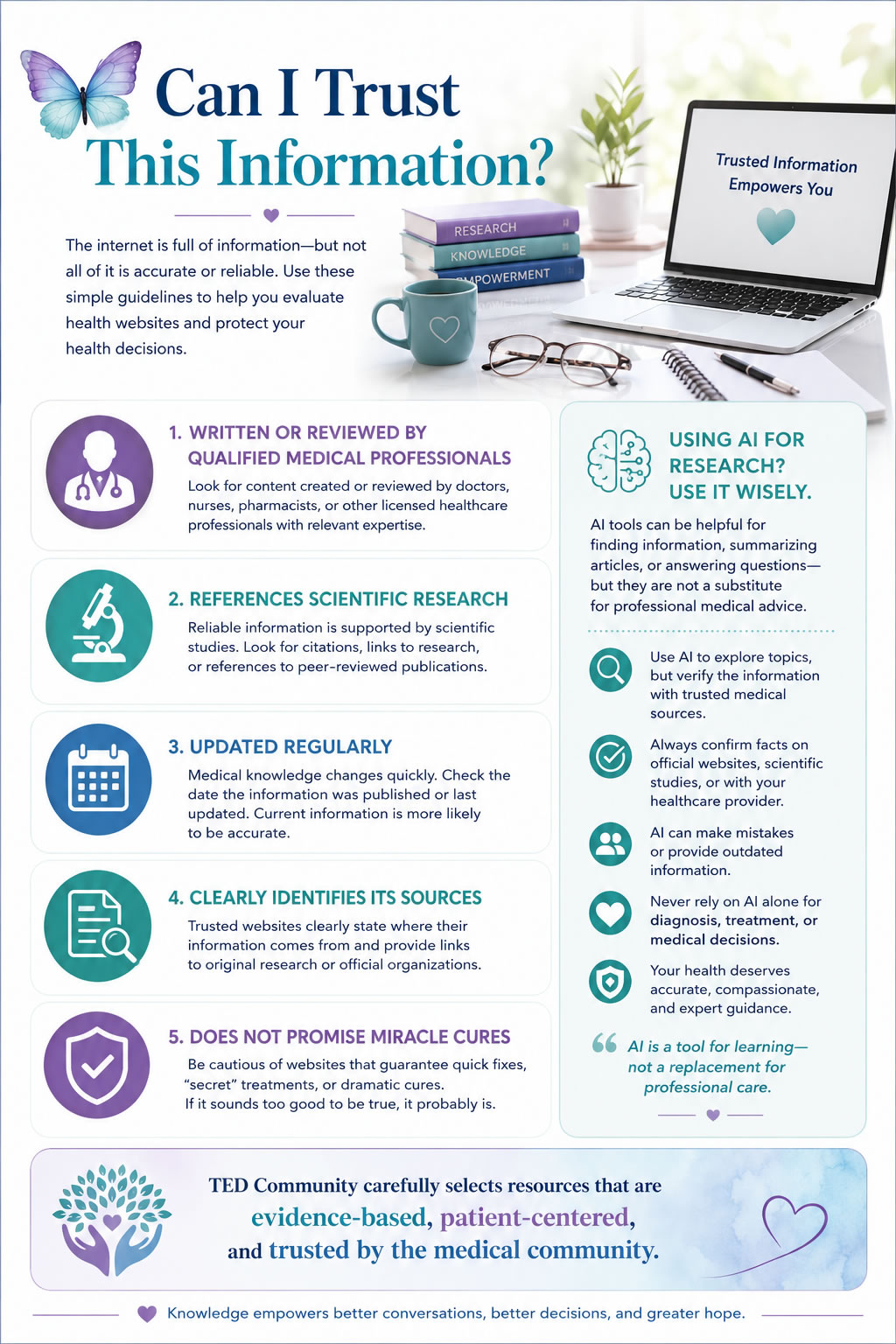
Featured Articles on Graves’ Disease & Thyroid Eye Disease
Graves’ Disease: Is It Time for Targeted Therapy?
Publication: Medicina (2025)
A fascinating review of the next generation of Graves’ Disease treatments, including therapies designed to interrupt the autoimmune process itself rather than simply treating symptoms.
Recent Advances in the Management of Graves’ Disease
Publication: Current Opinion in Endocrinology, Diabetes and Obesity
A review of evolving treatment options, including long-term antithyroid medications and emerging targeted therapies.
The Evolving Therapeutic Landscape of Graves’ Disease
Publication: European Thyroid Journal (2025)
An excellent overview of where Graves’ Disease treatment is headed over the next decade.
Management Aspects of Medical Therapy in Graves Disease
Publication: Endocrine Practice (2025)
A practical review discussing current medical treatments and how physicians make treatment decisions.
Targeted Immunotherapies for Graves’ Thyroidal & Orbital Disease
Publication: Frontiers in Immunology (2025)
Explores exciting new immune-based therapies currently being studied for Graves’ Disease and TED.
The Burden of Illness in Thyroid Eye Disease
Publication: Ophthalmology and Therapy (2025)
Examines how TED affects vision, quality of life, mental health, and daily living.
25-Year Outcomes After Graves’ Disease Treatment
Publication: Journal of Clinical Endocrinology & Metabolism (2024)
One of the most important long-term studies examining remission, relapse, and quality of life decades after treatment.
Thyroid Eye Disease: What’s the Latest?
Publication: Cleveland Clinic Journal of Medicine (2025)
An excellent physician-written update explaining the newest understanding of TED and current treatment options.
Mayo Clinic Guide to Graves’ Disease
Publication: Mayo Clinic
A trusted patient-friendly overview covering symptoms, diagnosis, and treatment options.
Graves Disease
Publication: StatPearls / National Library of Medicine
A comprehensive overview that bridges patient education and professional medical information.
Patient Preferences and Expectations in Graves’ Disease
Publication: Patient Preference and Adherence (2025)
An insightful review highlighting how Graves’ Disease affects emotional wellbeing, decision-making, and quality of life.
Thyroid: Year in Review 2024–2025
Publication: Endocrine Practice
A summary of the year’s most important thyroid research, including Graves’ Disease, TED, selenium studies, gut microbiome research, and emerging therapies.